 Written By dev
  0 Comments
  Publish Date : April 22, 2026
  0 min read
 If you’ve been posting on Instagram lately and your reach feels… off, you’re not alone.
A lot of creators and business owners are asking the same question: are Instagram hashtags dead?
Short answer: no, but they’re not what they used to be.
Instagram has changed a lot over the past few years. The algorithm now focuses more on content quality, keywords, and user behavior than just hashtags alone.
That means hashtags aren’t your main growth tool anymore, but they still have a place if you use them the right way.
Let’s break it down so you know exactly how to get reach in 2026.
What is a Hashtag and How do They Work?
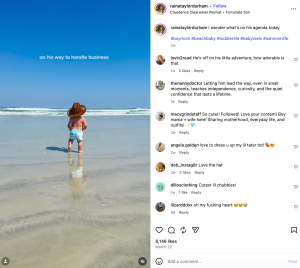
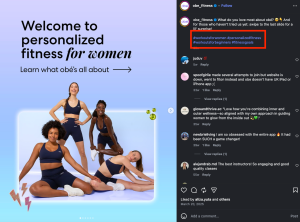
A hashtag is a word or phrase with a “#” in front of it, like #socialmediamarketing or #smallbusinessowner. See the cute example with blue hashtagsbelow:
On Instagram, hashtags help categorize content so people can discover posts based on topics they’re interested in.
Back in the day, hashtags were one of the main ways to grow. You could add 30 hashtags, hit “post,” and your content could show up in hashtag feeds and explode in reach.
Now, Instagram uses hashtags more as a support signal, not the main driver.
Here’s how hashtags work today:
- They help Instagram understand what your content is about
- They can still place your post in smaller niche discovery feeds
- They act as a secondary discovery tool, not the primary one
So while hashtags still matter, they don’t carry your content anymore. Your content has to do that on its own.
You can also use an Instagram growth service to help get more reach, and you should still make sure your content is top notch for real results in the long run.
Are Instagram Hashtags Still Relevant in 2026?
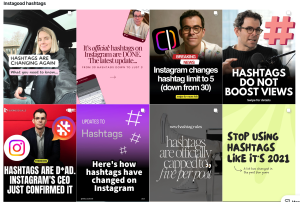
Yes, but they’re no longer the star of the show. Instagram has shifted toward AI-driven content discovery and new algorithm functionality.
Instead of relying heavily on hashtags, the platform now reads your captions, analyzes your video content, and tracks how users interact with your posts.
This means Instagram is asking:
- Are people watching your video all the way through?
- Are they saving or sharing your post?
- Does your content match what users are searching for?
If the answer is yes, your content gets pushed further.
Hashtags now play a smaller role. They help with context, but they won’t fix weak content or low engagement.
Think of hashtags like seasoning. They enhance the meal, but it’s not the main ingredient.
Keywords are King
If there’s one big shift you need to understand, it’s this: keywords matter more than hashtags now.
Instagram is basically becoming a search engine. People type things like “how to grow on Instagram” or “best coffee in LA,” and the platform shows content based on keywords, not just hashtags.
That means you should focus on:
- Writing captions that include searchable phrases
- Using clear, descriptive language in your posts
- Saying keywords out loud in your videos
- Adding keywords to your bio and name field
For example, instead of just writing a vague caption, say exactly what your content is about:
“Here are 3 Instagram growth tips for small business owners in 2026.”
That tells Instagram exactly who to show your post to. Hashtags can support this, but keywords do the heavy lifting.
It’s also very common for captions to use Instagram emojis so that they are more personable and descriptive. They won’t usually be your hashtags, but they should be in your content somewhere to follow the trends.
When You Should Still Use Instagram Hashtags
Even though hashtags aren’t the main growth tool anymore, there are still specific situations where they can give you a real advantage. The key is using them with intention instead of just adding them out of habit.
1. Running Campaigns
Hashtags are still very effective when you’re running a campaign because they create a clear, searchable thread of content.
If you’re launching a product, hosting a giveaway, or doing a limited-time challenge, a branded hashtag helps organize everything in one place. It also makes it easier for your audience to participate and follow along.
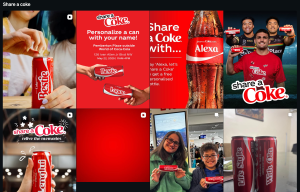
#shareacoke was an incredibly popular and viral campaign that took advantage of hashtags, and it’s still popular on the platform today.
For example, if you’re doing a 7-day challenge, using a hashtag like #7DaysWith[YourBrand] lets people click the tag and instantly see all posts related to that campaign.
This builds momentum and makes your campaign feel bigger than just a single post.
It also helps you track results. You can quickly see who is մասնակցating, what content they’re creating, and how your campaign is spreading across Instagram.
2. User-Generated Content (UGC)
Hashtags are one of the easiest ways to collect content from your audience without extra tools.
When you ask your customers or followers to post using a specific hashtag, you create a stream of real content tied to your brand.
This is powerful because people trust content from other users more than polished brand posts.
For example, a skincare brand might ask customers to use #GlowWith[BrandName]. Over time, that hashtag becomes a library of testimonials, before-and-after results, and real experiences.
This does two things. First, it gives you free content you can repost. Second, it builds credibility because new customers can see real people using your product.
To make this work, you need to remind your audience often. Mention the hashtag in your captions, stories, and even your bio so people actually use it.
You can get more Instagram followers when you engage followers through their own content.
3. Community Building
Hashtags still play a role in helping you connect with niche communities, especially if you’re in a specific industry or interest group.
Instead of trying to reach everyone, hashtags can help you reach the right people. When you use smaller, targeted hashtags, your content is more likely to show up in front of users who already care about that topic.
For example, if you’re a fitness coach for beginners, hashtags like #BeginnerFitnessJourney or #HomeWorkoutTips can connect you with people who are just starting out.
Here you can see an example of hashtags specifically for women workout content.
These users are more likely to engage, follow, and eventually become customers.
Hashtags also help you engage back. You can click on those same hashtags, find posts from your target audience, and interact with them.
This creates a two-way relationship instead of just posting and hoping people find you.
Over time, this builds a sense of community around your content, which is much more valuable than random reach.
You can also buy Instagram likes to help boost your engagement numbers and generate more natural engagement from your community over time.
Best Practices for Instagram Hashtags
If you’re going to use hashtags, you need to use them smartly. The old “just add 30 random hashtags” strategy doesn’t work anymore.
Here are five practical tips to help you get reach:
First, focus on relevance. Your hashtags should match your content exactly. If your post is about Instagram growth, don’t throw in unrelated trending hashtags just to chase reach. Instagram can tell.
Second, use fewer hashtags. You don’t need 30 anymore. In fact, Instagram now only allows 0-5 hashtags per post, a limit they are rolling out slowly to all reels and posts. So, they want you to be more targeted and focused instead of using a bunch of tags.
Third, mix niche and mid-size hashtags. Avoid super broad hashtags with millions of posts. Your content will get buried. Instead, use hashtags that your ideal audience is actually browsing.
Fourth, treat hashtags as support, not strategy. Your hook, visuals, and message matter more than anything else. If your content isn’t engaging, hashtags won’t save it.
Fifth, test and adjust. Instagram is always changing. Try different hashtag sets and see what works best for your audience.
If you need help thinking of good hashtags, you can use an Instagram hashtag generator for ideas, or do some market research and see what competitors are doing.
Final verdict: Are Instagram Hashtags Dead?
No, Instagram hashtags are not dead. But they are no longer the main way to grow.
In 2026, growth comes from:
- Strong content that holds attention
- Clear messaging with keywords
- High engagement like saves and shares
- Consistency over time
Hashtags are just one small piece of the puzzle now.
If you rely only on hashtags, your growth will likely stall. But if you combine good content, smart keywords, and strategic hashtags, you can still grow your reach and build your brand.
The game has changed, but the opportunity is still there.
FAQ
Are hashtags pointless now?
Not pointless, just less powerful.
Hashtags still help categorize your content and can bring in small amounts of extra reach. But they won’t drive massive growth on their own anymore.
You need strong content and keyword optimization to see real results.
What is the 333 hashtag rule?
The 333 hashtag rule is a strategy where you rotate between three sets of 3 hashtags, often mixing niche, medium, and broad tags.
While this method used to work better in the past, it’s not as important today. What matters more is choosing hashtags that are highly relevant to your content and audience.
What’s replacing hashtags?
Keywords and content signals are replacing hashtags.
Instagram now focuses on what your content is about, how people interact with it, and whether it matches user searches.
That means your Instagram captions, video text, and spoken words matter more than hashtags.
Does Gen Z use hashtags?
Yes, but differently.
Gen Z tends to use fewer hashtags and focuses more on captions, trends, and relatable content. They care more about authenticity and entertainment than optimizing posts with a long list of hashtags.
If you’re targeting Gen Z, focus on content quality first. Hashtags should be minimal and intentional.
 Sara Menendez
 26th Dec